
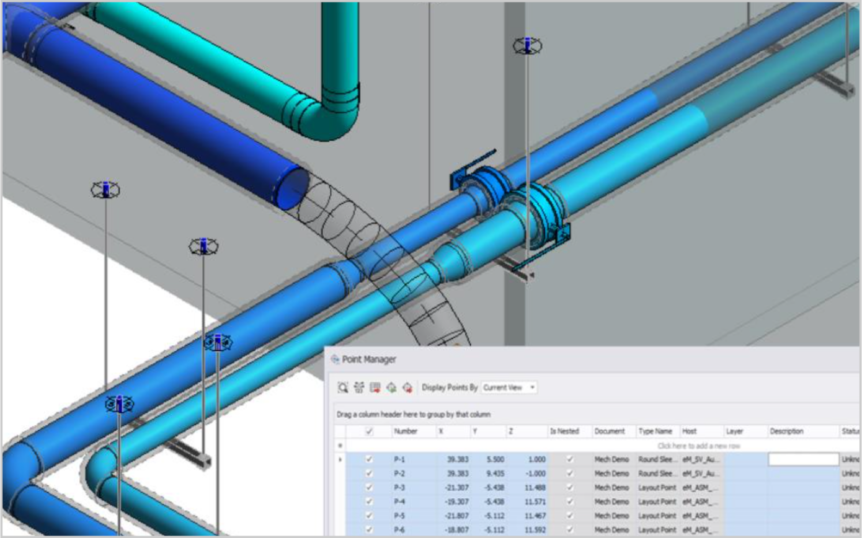
Building Information Modeling (BIM) has revolutionized the architecture, engineering, and construction (AEC) industry, enabling more efficient project delivery and enhanced collaboration. In Chicago, IL, a city known for its iconic skyline and complex infrastructure projects, BIM modeling and coordination play a pivotal role in shaping the urban landscape. This article explores the significance of BIM in Chicago’s construction sector, the benefits it offers, and how local firms leverage this technology to drive innovation and efficiency.
Wait, are you interested in talking to a human instead of reading this full blog? Contact us to learn more about our services and whether BIMTM is the 100% U.S. based team you need on your next project.

The Growing Importance of BIM in Chicago’s Construction Industry
Chicago’s construction industry has experienced significant growth over the past decade, with numerous large-scale commercial, residential, and infrastructure projects underway. According to the Chicago Metropolitan Agency for Planning, the city is expected to see continued urban development, with an emphasis on sustainable and smart building practices. BIM technology has emerged as a critical tool in managing these complex projects.
BIM allows project stakeholders—including architects, engineers, contractors, and owners—to create detailed 3D digital representations of buildings. These models contain not just geometric data but also comprehensive information about materials, timelines, costs, and maintenance schedules. For Chicago, where construction projects often involve tight urban spaces and intricate designs, BIM facilitates better visualization and coordination, reducing costly errors and delays.
Chicago’s Unique Challenges and BIM Solutions
One of the defining characteristics of construction in Chicago is the need to navigate the city’s dense urban environment and regulatory landscape. Projects frequently require coordination with multiple agencies, adherence to strict zoning laws, and integration with existing infrastructure. BIM’s ability to centralize data and provide real-time updates helps teams stay aligned and compliant.
For example, the Chicago Transit Authority (CTA) has incorporated BIM into its modernization efforts, using detailed models to plan upgrades to stations and rail lines without disrupting daily operations. Similarly, developers working on high-rise buildings along the Chicago River utilize BIM to address structural complexities and environmental considerations effectively.
Moreover, as the city grapples with the challenges posed by climate change, BIM plays a crucial role in promoting sustainable construction practices. By simulating energy performance and analyzing material efficiency, project teams can make informed decisions that minimize environmental impact. In Chicago, where extreme weather conditions can affect building integrity, BIM helps in designing resilient structures that can withstand such challenges. The integration of renewable energy solutions, such as solar panels and green roofs, can also be modeled within the BIM framework, allowing for a holistic approach to eco-friendly building.
Additionally, the collaborative nature of BIM fosters innovation among stakeholders. As architects and engineers work together on a shared platform, they can brainstorm creative solutions that enhance both functionality and aesthetics. This synergy is particularly beneficial in a city known for its architectural heritage, as it allows for the preservation of historical elements while integrating modern design principles. The result is a construction landscape that not only meets the needs of today’s urban dwellers but also honors Chicago’s rich architectural legacy.
Key Benefits of BIM Modeling and Coordination
Enhanced Collaboration and Communication
One of BIM’s most significant advantages is its capacity to foster collaboration among diverse project teams. In Chicago’s multifaceted projects, stakeholders often include city planners, environmental consultants, and multiple subcontractors. BIM platforms enable these groups to work from a unified model, ensuring everyone has access to the latest information.
This collaborative approach minimizes misunderstandings and streamlines decision-making. For instance, clash detection tools within BIM software identify conflicts between mechanical, electrical, and plumbing systems early in the design phase, preventing costly rework during construction.
Improved Project Efficiency and Cost Savings
BIM’s detailed planning capabilities contribute directly to increased efficiency. By simulating construction sequences and logistics, teams can optimize schedules and resource allocation. Chicago-based contractors report that BIM integration has reduced project timelines by up to 20%, a crucial advantage in a competitive market.
Cost savings also arise from better material management and waste reduction. BIM models provide accurate quantity takeoffs, helping procurement teams order precise amounts of materials. This precision is particularly valuable in Chicago’s sustainability-driven projects, where minimizing waste aligns with green building standards such as LEED certification.
Enhanced Facility Management and Lifecycle Planning
BIM’s utility extends beyond construction into facility management. Chicago’s building owners benefit from BIM’s ability to store comprehensive data about building components, maintenance schedules, and warranties. This information supports proactive maintenance and reduces operational costs over a building’s lifecycle.
For example, the University of Chicago has implemented BIM-based asset management systems across its campus, enabling efficient tracking of building systems and infrastructure upgrades. Such initiatives highlight BIM’s role in promoting long-term sustainability and operational excellence.
Leading BIM Practices and Technologies in Chicago
Advanced Software and Integration
Chicago’s AEC firms employ a range of advanced BIM software solutions, including Autodesk Revit, Navisworks, and Bentley Systems. These tools facilitate detailed modeling, clash detection, and 4D scheduling, integrating design and construction phases seamlessly.
Moreover, the integration of BIM with Geographic Information Systems (GIS) is gaining traction in Chicago, particularly for infrastructure projects. This combination allows for spatial analysis and improved planning in urban contexts, supporting initiatives such as flood mitigation and transportation network enhancements.
Collaborative Project Delivery Methods
Design-Build and Integrated Project Delivery (IPD) methods are increasingly popular in Chicago, leveraging BIM to enhance collaboration. These approaches bring stakeholders together early, aligning goals and sharing risks and rewards. BIM serves as the technological backbone, ensuring transparency and coordination.
The Chicago O’Hare International Airport expansion project exemplifies this approach, where BIM-enabled IPD has facilitated coordination among multiple contractors and agencies, resulting in streamlined workflows and minimized disruptions.
Training and Workforce Development
Recognizing the importance of BIM expertise, Chicago’s educational institutions and industry organizations offer specialized training programs. The Illinois Institute of Technology and local chapters of the American Institute of Architects (AIA) provide courses and workshops to equip professionals with the latest BIM skills.
This emphasis on workforce development ensures that Chicago remains at the forefront of BIM adoption, supporting the city’s ambitious construction agenda.
Future Trends and Opportunities for BIM in Chicago
Integration with Emerging Technologies
The future of BIM in Chicago is closely linked with emerging technologies such as artificial intelligence (AI), augmented reality (AR), and the Internet of Things (IoT). AI-powered analytics can enhance predictive maintenance and optimize design choices, while AR enables immersive visualization for stakeholders.
IoT integration allows real-time monitoring of building systems, feeding data back into BIM models to support dynamic facility management. These innovations promise to elevate BIM’s role from a design tool to a comprehensive platform for smart building management.
Focus on Sustainability and Resilience
As Chicago confronts climate change challenges, BIM will be instrumental in designing resilient and energy-efficient buildings. BIM’s capacity to simulate environmental impacts and energy performance supports compliance with evolving regulations and sustainability goals.
Projects like the Chicago Center for Green Technology demonstrate how BIM facilitates the integration of renewable energy systems and sustainable materials, setting benchmarks for future developments.
Expanding Use in Infrastructure and Public Works
Beyond buildings, BIM’s application in infrastructure projects is expanding rapidly in Chicago. Transportation, utilities, and public works projects benefit from BIM’s ability to manage complex data and coordinate multiple disciplines.
The city’s investments in smart infrastructure, including traffic management and water systems, are increasingly BIM-driven, enhancing operational efficiency and public safety.
Conclusion
BIM modeling and coordination have become indispensable components of Chicago’s construction industry, driving innovation, efficiency, and sustainability. By enabling enhanced collaboration, reducing costs, and supporting lifecycle management, BIM empowers stakeholders to deliver high-quality projects in one of America’s most dynamic urban environments.
As technology advances and Chicago continues to grow, the integration of BIM with emerging tools and practices will unlock new opportunities for smarter, greener, and more resilient built environments. For professionals and organizations involved in Chicago’s construction sector, embracing BIM is not just a competitive advantage—it is essential for future success.
As Chicago’s construction landscape continues to evolve, embracing BIM is not just a strategic move—it’s a necessity for staying ahead. With BIMTM’s Lead Coordination service, you can ensure seamless collaboration across all phases of your project, integrating design, construction, and facility management into a unified digital workflow. Our expertise in MEP Coordination and Modeling translates intricate electrical and systems work from screen to site with precision. Whether you’re looking to augment your project with expert BIM modeling services, require REVIT staff training, or need comprehensive BIM consulting to balance creativity with constructability, BIMTM is your go-to partner. Don’t let your project fall behind due to lack of expertise or capacity. Contact us today and take the first step towards smarter design and construction with BIMTM.