
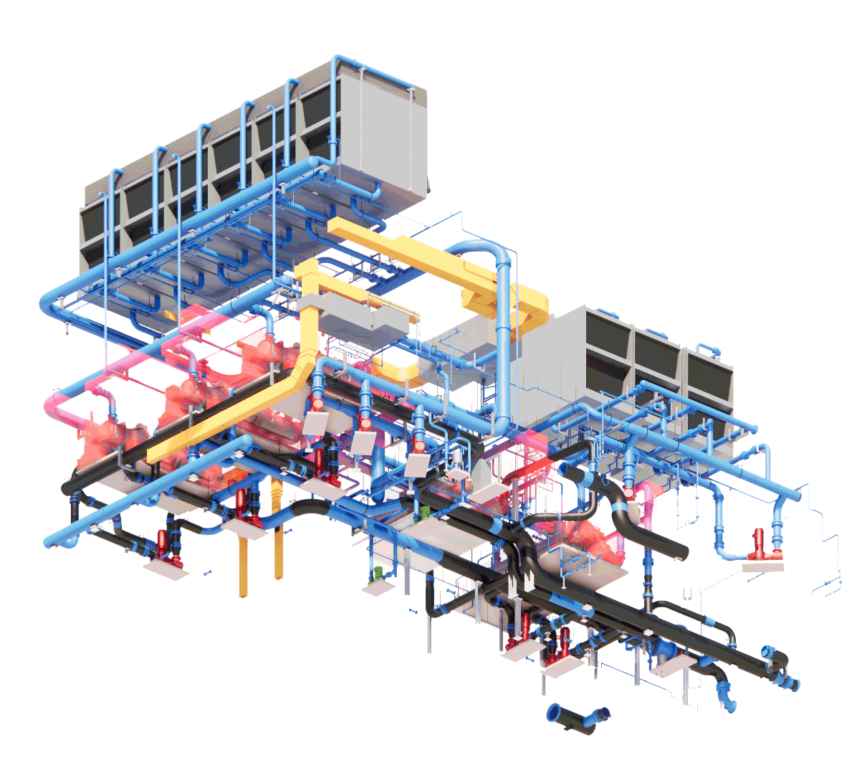
BIMTM recognizes that Building Information Modeling (BIM) has transformed the way construction projects are planned, coordinated, and executed. In Chicago, IL—a city known for its architectural diversity and complex infrastructure—BIM modeling for mechanical systems plays a crucial role in delivering efficient, sustainable, and cost-effective projects. BIMTM leverages this technology to address the unique challenges of Chicago’s building environment, ensuring mechanical systems are designed and implemented with unmatched accuracy and collaboration.
Wait, are you interested in talking to a human instead of reading this full blog? Contact us to learn more about our services and whether BIMTM is the 100% U.S. based team you need on your next project.

Understanding BIM Modeling for Mechanical Systems
BIM modeling for mechanical systems involves developing detailed digital representations of HVAC, plumbing, fire protection, and other critical building components. Unlike traditional 2D drawings, BIM offers intelligent 3D models that embed data such as system specifications, spatial relationships, and performance details.
This approach allows project stakeholders to see how every duct, pipe, and piece of equipment integrates within the broader building framework. By coordinating in a shared digital environment, costly errors and misalignments are avoided. Real-time updates ensure that changes are reflected instantly across the model, keeping projects on schedule and within budget.
Key Features of Mechanical BIM Models
BIMTM emphasizes the following core capabilities within its mechanical system models:
- 3D Visualization: Complete geometry of ducts, pipes, valves, and equipment.
- Data Integration: Material properties, dimensions, capacities, and maintenance schedules.
- Clash Detection: Automatic identification of system conflicts before they reach the field.
- Simulation Capabilities: Analysis of airflow, thermal comfort, and energy performance.
These features enhance design accuracy, streamline construction, and deliver higher-performing buildings. BIMTM ensures adaptability throughout every project phase, minimizing disruptions while maximizing efficiency and quality.
The Importance of BIM for Mechanical Systems in Chicago
Chicago’s mix of historic landmarks and modern skyscrapers demands tailored solutions that balance functionality and aesthetics. Coupled with the city’s extreme climate—cold winters and hot, humid summers—mechanical systems must be both resilient and energy-efficient.
BIMTM uses simulation tools to optimize HVAC performance before construction even begins, ensuring comfort, efficiency, and compliance with regulations.
Addressing Complex Urban Infrastructure
Chicago’s dense urban setting requires careful planning of mechanical systems within tight spaces, while also coordinating with existing utilities. BIMTM’s clash detection prevents costly on-site conflicts and delays. Additionally, the city’s strict building codes and sustainability standards, including LEED requirements, are more easily met through the precision of BIM modeling.
Benefits of BIM Modeling for Mechanical Systems
For projects in Chicago, BIMTM’s approach delivers:
- Enhanced Collaboration: A unified model ensures all stakeholders work with the same information.
- Improved Accuracy: Errors are identified early, reducing rework.
- Cost and Time Savings: Projects benefit from predictable installation and fewer delays.
- Energy Efficiency: Optimized systems support sustainability goals like those outlined in the Chicago Climate Action Plan.
Case Studies in Chicago
- Vista Tower: BIM was integral to coordinating HVAC and plumbing within its slender footprint, reducing conflicts and accelerating construction.
- O’Hare International Airport Expansion: BIM enabled seamless management of large-scale ventilation and plumbing systems, improving both efficiency and passenger comfort.
Choosing BIMTM as a Partner
BIMTM provides expertise in mechanical system modeling with:
- Local Experience: Knowledge of Chicago’s codes, climate, and infrastructure.
- Technical Mastery: Proficiency in leading BIM platforms and MEP coordination tools.
- Proven Results: Successful delivery across complex projects in urban environments.
The Future of Mechanical BIM in Chicago
With integration of IoT sensors, AI analytics, and augmented reality, BIMTM is shaping the future of smarter, more efficient buildings. In a city prioritizing modernization and sustainability, BIMTM is positioned to drive progress in mechanical system optimization and lifecycle management.
Conclusion
For Chicago’s diverse and demanding construction environment, BIMTM delivers BIM modeling for mechanical systems that enhances collaboration, reduces costs, and drives sustainability. From high-rise towers to expansive infrastructure projects, BIMTM ensures constructibility, efficiency, and long-term performance.
With specialized services in MEP coordination, REVIT modeling, and staff training, BIMTM helps project teams eliminate errors, minimize delays, and achieve seamless execution from design through construction. Stakeholders seeking reliable, precise, and future-ready BIM solutions can depend on BIMTM for expert-level support every step of the way.