
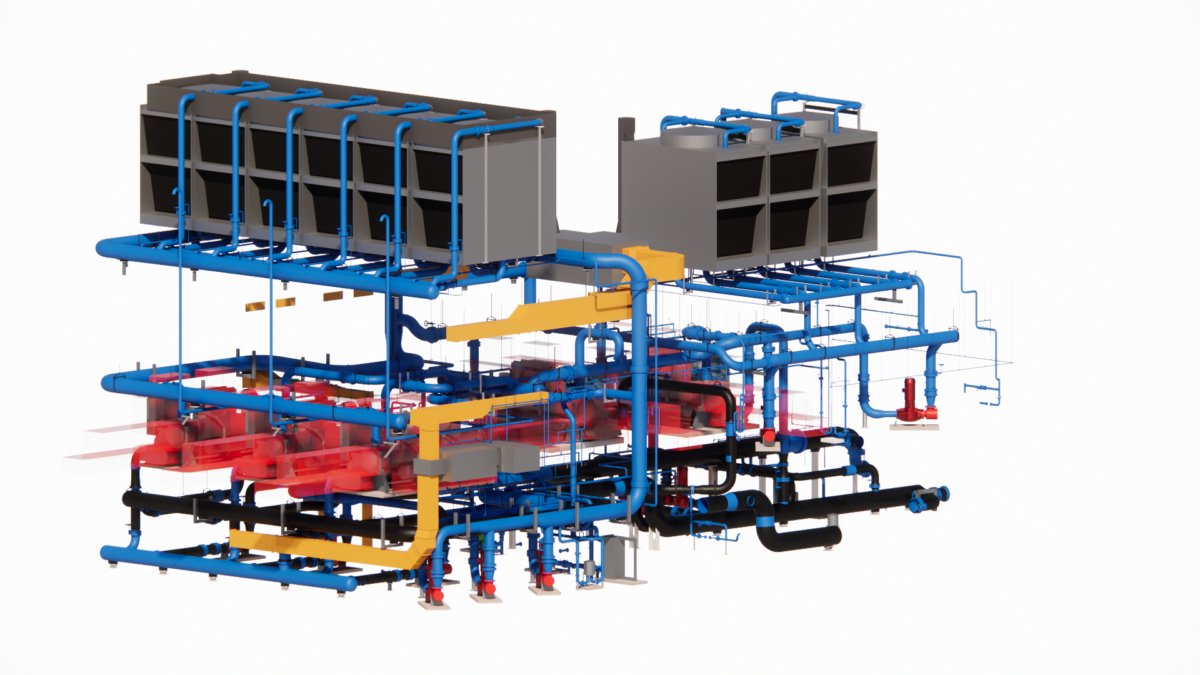
Building Information Modeling (BIM) has revolutionized the architecture, engineering, and construction (AEC) industries by enabling precise digital representations of physical and functional characteristics of buildings. In Washington DC, a city known for its complex infrastructure and stringent building codes, BIM modeling for HVAC systems is becoming an indispensable tool for engineers, contractors, and building owners alike.
This article explores the significance of BIM in HVAC design and implementation within the Washington DC metropolitan area, highlighting its benefits, challenges, and real-world applications in a city where sustainability and efficiency are paramount.
Wait, are you interested in talking to a human instead of reading this full blog? Contact us to learn more about our services and whether BIMTM is the 100% U.S. based team you need on your next project.

Understanding BIM and Its Role in HVAC System Design
What Is BIM and Why It Matters for HVAC
Building Information Modeling (BIM) is a digital process that involves creating and managing detailed 3D models of building components. Unlike traditional 2D drawings, BIM models integrate geometry, spatial relationships, geographic information, and detailed data about materials and systems. For HVAC systems, this means that every duct, pipe, valve, and piece of equipment can be precisely modeled and coordinated with other building elements.
In Washington DC, where buildings must comply with strict energy codes such as the DC Energy Conservation Code (based on the International Energy Conservation Code), BIM helps ensure HVAC designs meet these requirements efficiently. By simulating airflow, thermal loads, and energy consumption, engineers can optimize system performance before construction begins.
Integration with Other Building Systems
One of BIM’s greatest strengths is its ability to integrate HVAC systems with other building components, such as electrical, plumbing, and structural elements. This interdisciplinary coordination is crucial in urban environments like Washington DC, where space constraints and complex infrastructure demand precise planning.
Through clash detection and real-time collaboration, BIM minimizes costly onsite conflicts, reduces rework, and accelerates project timelines. For HVAC contractors, this means fewer surprises during installation and better alignment with architectural and structural designs.
Benefits of BIM Modeling for HVAC Systems in Washington DC
Enhanced Design Accuracy and Efficiency
Accurate HVAC design is critical for occupant comfort, energy efficiency, and regulatory compliance. BIM enables engineers to create highly detailed models that account for building geometry, occupancy patterns, and environmental factors specific to Washington DC’s climate.
For example, the city experiences hot, humid summers and cold winters, which affect heating and cooling loads. BIM tools can simulate these seasonal variations, allowing for HVAC systems tailored to local conditions. This leads to better sizing of equipment, optimized duct layouts, and improved energy performance.
Improved Collaboration Among Stakeholders
Washington DC’s construction projects often involve multiple stakeholders, including government agencies, private developers, architects, and engineers. BIM fosters a collaborative environment where all parties can access and contribute to a shared model.
This transparency reduces misunderstandings and streamlines decision-making. For HVAC systems, it means design changes can be quickly communicated and evaluated, ensuring that the final system meets both technical specifications and budget constraints.
Cost Savings and Risk Mitigation
Implementing BIM for HVAC systems helps identify potential issues early in the design phase, reducing costly change orders and delays during construction. According to a 2023 report by the National Institute of Building Sciences, projects using BIM experienced up to 20% reduction in overall construction costs.
In Washington DC, where construction costs are among the highest in the nation, these savings are significant. Additionally, BIM’s detailed documentation supports compliance with local codes and standards, minimizing the risk of penalties or costly retrofits.
Challenges and Considerations for BIM Implementation in HVAC Projects
Initial Investment and Training
While BIM offers substantial long-term benefits, its adoption requires upfront investment in software, hardware, and workforce training. HVAC contractors and engineers in Washington DC must ensure their teams are proficient with BIM platforms such as Autodesk Revit or Navisworks.
Smaller firms may find these costs challenging, but many local industry associations and government programs offer training resources and incentives to encourage BIM adoption. The District’s commitment to sustainable building practices also supports BIM integration through grant programs and technical assistance.
Data Management and Model Complexity
BIM models for HVAC systems can become highly complex, especially in large commercial or institutional buildings common in Washington DC. Managing vast amounts of data requires robust IT infrastructure and clear protocols for model updates, version control, and data sharing.
Ensuring data accuracy and consistency is critical to avoid errors that could compromise system performance or regulatory compliance. Effective project management and communication strategies are essential to harness BIM’s full potential.
Case Studies: BIM in HVAC Projects Across Washington DC
Government Buildings and Public Infrastructure
The Washington DC government has increasingly embraced BIM for public building projects to meet sustainability goals outlined in the District’s Sustainable DC Plan. For instance, the renovation of the Ronald Reagan Building and International Trade Center incorporated BIM to upgrade its HVAC systems, improving energy efficiency and indoor air quality.
By simulating different HVAC configurations and integrating with energy modeling tools, engineers optimized the system to reduce energy consumption by approximately 15%, aligning with the city’s aggressive carbon reduction targets.
Commercial and Mixed-Use Developments
Large commercial developments in downtown Washington DC, such as office towers and mixed-use complexes, have leveraged BIM to streamline HVAC design and installation. One notable project involved a 20-story office building where BIM facilitated coordination between HVAC, electrical, and fire protection systems, preventing costly clashes in tight mechanical spaces.
The project team reported a 25% reduction in installation time and significant improvements in system performance monitoring post-occupancy, thanks to BIM-enabled commissioning processes.
Healthcare Facilities
Healthcare buildings in Washington DC present unique HVAC challenges due to stringent air quality and infection control requirements. BIM modeling has been instrumental in designing complex ventilation systems that meet these standards.
At a major hospital expansion, BIM was used to model airflow patterns and filtration systems, ensuring compliance with ASHRAE standards and local health codes. The digital model also facilitated ongoing maintenance and future upgrades by providing detailed system documentation accessible to facility managers.
The Future of BIM for HVAC Systems in Washington DC
Integration with Smart Building Technologies
The rise of smart buildings in Washington DC is driving the integration of BIM with Internet of Things (IoT) devices and building automation systems. This convergence allows real-time monitoring and adaptive control of HVAC systems, enhancing energy efficiency and occupant comfort.
BIM models serve as the digital backbone for these smart systems, enabling predictive maintenance and data-driven decision-making. As the city continues to prioritize green building initiatives, BIM-enabled smart HVAC systems will become increasingly common.
Regulatory Trends and Sustainability Goals
Washington DC’s commitment to sustainability, including its goal to achieve carbon neutrality by 2050, will further elevate the role of BIM in HVAC design. Future building codes are expected to incorporate more stringent energy performance requirements, making BIM’s simulation and optimization capabilities essential.
Moreover, incentives for green building certifications such as LEED and WELL often require detailed documentation and performance verification, tasks well-suited to BIM workflows.
Conclusion
BIM modeling for HVAC systems is transforming how buildings in Washington DC are designed, constructed, and operated. By enhancing accuracy, collaboration, and efficiency, BIM helps meet the city’s unique climate challenges and sustainability ambitions. While initial investments and data management pose challenges, the long-term benefits in cost savings, compliance, and system performance make BIM an invaluable asset for HVAC professionals in the region.
As Washington DC continues to evolve as a leader in sustainable urban development, BIM-enabled HVAC systems will play a critical role in shaping the city’s built environment for decades to come.
Ready to elevate your HVAC project in Washington DC with the precision of BIM modeling? BIMTM is at the forefront of integrating design, construction, and facility management into a seamless digital workflow. Our Lead Coordination service ensures that all stakeholders collaborate effectively, with clear guidelines and proactive conflict resolution. With BIMTM’s MEP Coordination and Modeling services, you can expect constructible, efficient designs that translate flawlessly from screen to site. Don’t let capacity constraints slow you down; our team is ready to augment your project with expert BIM modeling services and REVIT staff training. Contact us today to partner with BIMTM and design smarter, ensuring your HVAC systems are built for the future of Washington DC’s sustainable urban landscape.