
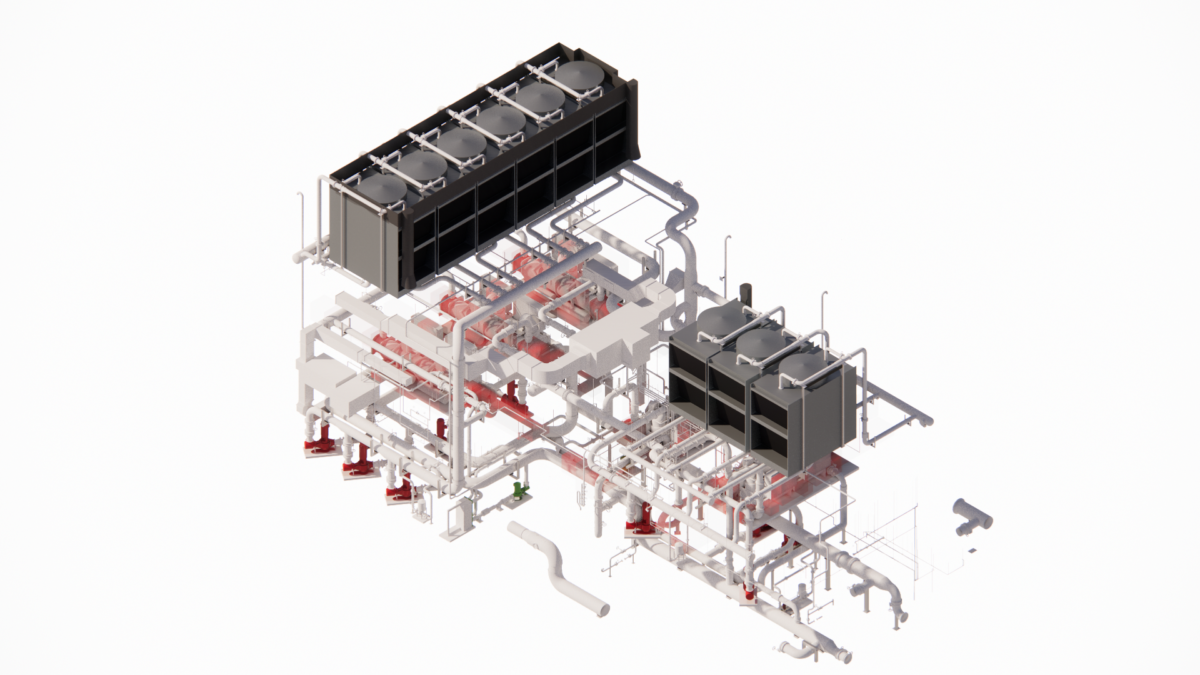
Building Information Modeling (BIM) has revolutionized the construction and design industries, offering unparalleled precision and collaboration opportunities. In Tampa, Florida, where the climate demands efficient and reliable HVAC systems, BIM modeling has become an essential tool for engineers, contractors, and building owners alike. This article explores the significance of BIM modeling for HVAC systems in Tampa, highlighting its benefits, implementation strategies, and real-world applications.
Wait, are you interested in talking to a human instead of reading this full blog? Contact us to learn more about our services and whether BIMTM is the 100% U.S. based team you need on your next project.

Understanding BIM and Its Role in HVAC System Design
Building Information Modeling (BIM) is a digital representation of the physical and functional characteristics of a facility. It serves as a shared knowledge resource, providing a reliable basis for decision-making throughout a building’s lifecycle. When applied to HVAC systems, BIM enables detailed visualization, simulation, and analysis of heating, ventilation, and air conditioning components within a building’s infrastructure.
In Tampa’s humid subtropical climate, HVAC systems must be designed to handle high humidity levels, frequent temperature fluctuations, and energy efficiency demands. BIM modeling allows engineers to integrate these environmental factors into the design process, ensuring that HVAC systems are optimized for local conditions.
Key Features of BIM for HVAC
BIM for HVAC systems includes 3D modeling of ductwork, piping, equipment, and controls. It supports clash detection to prevent spatial conflicts with other building systems such as electrical and plumbing. Additionally, BIM facilitates accurate load calculations, energy analysis, and maintenance scheduling, all of which contribute to system longevity and performance.
Benefits of BIM Modeling for HVAC Systems in Tampa
Adopting BIM for HVAC projects in Tampa offers numerous advantages that address both technical challenges and project management needs.
Enhanced Design Accuracy and Coordination
One of the most significant benefits of BIM is its ability to improve design accuracy. Traditional 2D drawings often lead to misinterpretations and errors, especially when coordinating complex HVAC layouts with other building systems. BIM’s 3D environment allows all stakeholders—engineers, architects, and contractors—to visualize the HVAC system within the building context, reducing the risk of clashes and rework.
In Tampa, where construction costs have risen by approximately 6% annually over the past few years, minimizing costly errors is critical. BIM’s clash detection capabilities can reduce rework by up to 40%, translating into substantial savings and faster project delivery.
Energy Efficiency and Sustainability
Energy consumption is a major concern in Tampa due to the high demand for cooling throughout much of the year. BIM enables detailed energy modeling, allowing HVAC designers to simulate system performance under various scenarios. This capability supports the selection of energy-efficient equipment and system configurations that reduce operational costs and environmental impact.
Moreover, BIM supports compliance with green building certifications such as LEED and WELL, which are increasingly sought after in Tampa’s commercial and residential developments. By integrating sustainability goals early in the design phase, BIM helps create HVAC systems that contribute to healthier, more comfortable indoor environments.
Improved Project Collaboration and Communication
BIM fosters collaboration by providing a centralized platform where all project participants can access up-to-date information. This transparency is especially valuable in Tampa’s fast-growing construction market, where multiple contractors and subcontractors often work simultaneously on complex projects.
Real-time updates and cloud-based BIM platforms ensure that HVAC designers, mechanical contractors, and project managers are aligned, reducing delays and misunderstandings. Enhanced communication also supports better scheduling and resource allocation, which are vital for meeting Tampa’s tight construction timelines.
Implementing BIM for HVAC Systems in Tampa: Best Practices
Successful BIM implementation requires careful planning, skilled personnel, and appropriate technology. The following best practices can help Tampa-based firms maximize the benefits of BIM for HVAC systems.
Invest in Skilled BIM Professionals
Proficiency in BIM software such as Autodesk Revit, Navisworks, and specialized HVAC modeling tools is essential. Tampa’s engineering firms are increasingly investing in training and certification programs to build a workforce capable of leveraging BIM’s full potential.
Hiring or developing BIM coordinators who understand both HVAC engineering and BIM workflows can bridge the gap between design and construction teams, ensuring smooth project execution.
Integrate BIM Early in the Project Lifecycle
The greatest value of BIM is realized when it is integrated from the earliest design stages. Early adoption allows for comprehensive system analysis, clash detection, and design optimization before construction begins. In Tampa, where weather conditions can cause project delays, early BIM integration helps mitigate risks by identifying potential issues upfront.
Leverage Local Climate Data and Standards
Tampa’s unique climate requires HVAC systems to be designed with humidity control and energy efficiency in mind. Incorporating local weather data and compliance with Florida Building Code requirements into BIM models ensures that HVAC designs are both effective and code-compliant.
Additionally, collaborating with local utility providers and sustainability consultants can enhance the accuracy of energy models and support incentives for energy-efficient building practices.
Case Studies: BIM-Driven HVAC Success in Tampa
Several recent projects in Tampa demonstrate the transformative impact of BIM on HVAC system design and construction.
Commercial Office Building in Downtown Tampa
A 15-story office tower utilized BIM to coordinate complex HVAC ductwork with architectural and structural elements. The project team identified and resolved over 300 clashes before construction, avoiding costly on-site modifications. Energy modeling conducted through BIM led to the selection of high-efficiency chillers and variable air volume systems, reducing projected energy consumption by 25% compared to conventional designs.
Healthcare Facility Expansion
In a major hospital expansion, BIM was used to design a sophisticated HVAC system that met stringent indoor air quality standards. The model facilitated precise control of airflow and filtration systems critical to patient safety. Coordination with medical gas and electrical systems was streamlined through BIM, accelerating the project schedule by three months.
The Future of BIM for HVAC in Tampa
As Tampa continues to grow and embrace smart city initiatives, BIM modeling for HVAC systems is expected to evolve alongside emerging technologies.
Integration with IoT and Smart Building Systems
The integration of BIM with Internet of Things (IoT) devices offers exciting possibilities for HVAC system monitoring and maintenance. Real-time data from sensors can be fed back into BIM models, enabling predictive maintenance and performance optimization. This approach can help Tampa building owners reduce downtime and extend equipment lifespan.
Advancements in AI and Automation
Artificial intelligence is beginning to play a role in automating HVAC design tasks within BIM environments. Machine learning algorithms can analyze vast datasets to recommend optimal system configurations, further enhancing energy efficiency and cost-effectiveness. Tampa’s engineering firms are exploring these innovations to stay competitive and deliver cutting-edge solutions.
Conclusion
BIM modeling for HVAC systems is transforming the way buildings are designed, constructed, and operated in Tampa, Florida. By improving design accuracy, enhancing energy efficiency, and fostering collaboration, BIM addresses the unique challenges posed by Tampa’s climate and construction market. As technology advances, the integration of BIM with smart building systems and AI will further elevate HVAC design and management, supporting Tampa’s vision for sustainable and resilient infrastructure.
For engineers, contractors, and building owners in Tampa, embracing BIM is no longer optional but a strategic imperative to achieve superior HVAC system performance and project success.
Ready to harness the full potential of BIM for your HVAC systems in Tampa? Partner with BIMTM and experience the pinnacle of Lead Coordination services. Our expertise in MEP Coordination and Modeling is designed to ensure your project is not only constructible but also optimized for efficiency and free from costly rework. With BIMTM, you gain access to a team of seasoned tradespeople and BIM experts who are committed to making your vision a reality. From project augmentation to REVIT staff training, we are your comprehensive BIM resource. Don’t let project complexities hold you back. Contact us today and take the first step towards smarter design and seamless project execution.