
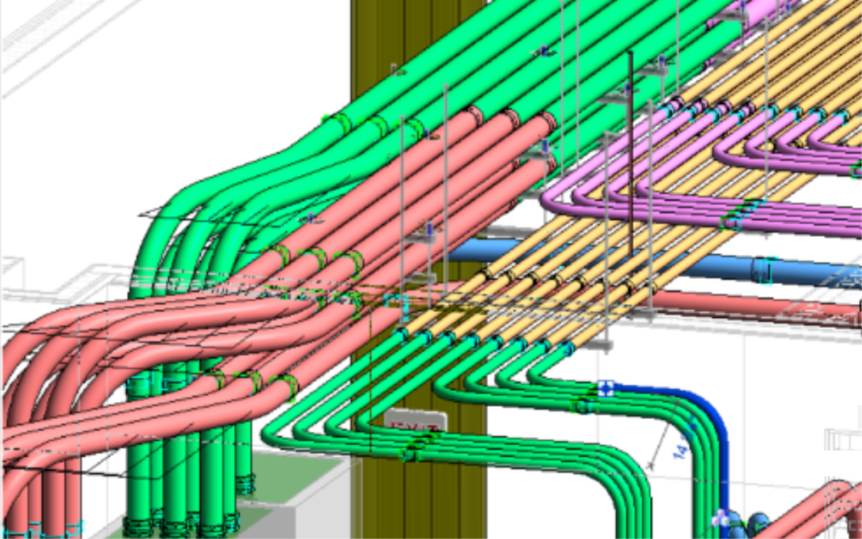
Building Information Modeling (BIM) has revolutionized the architecture, engineering, and construction (AEC) industries worldwide. In Los Angeles, CA, a city known for its dynamic urban landscape and ambitious infrastructure projects, BIM modeling and coordination have become indispensable tools for delivering efficient, sustainable, and cost-effective construction outcomes. This article explores the significance of BIM in Los Angeles, the benefits it brings to local projects, and how coordination through BIM is shaping the future of construction in the region.
Wait, are you interested in talking to a human instead of reading this full blog? Contact us to learn more about our services and whether BIMTM is the 100% U.S. based team you need on your next project.

The Growing Importance of BIM in Los Angeles Construction
Los Angeles is home to one of the most diverse and fast-paced construction markets in the United States. From high-rise commercial buildings and residential complexes to transportation infrastructure and entertainment venues, the city demands innovative solutions to manage complex projects efficiently. BIM has emerged as a critical technology that addresses these challenges by providing a comprehensive digital representation of physical and functional characteristics of a facility.
According to a 2023 report by Dodge Data & Analytics, over 70% of contractors in California have adopted BIM processes, with Los Angeles leading the charge due to its dense urban environment and stringent regulatory requirements. The city’s commitment to sustainability and green building practices further propels BIM adoption, as it facilitates energy modeling, material optimization, and lifecycle management.
Why BIM is Essential for Los Angeles Projects
Several factors make BIM particularly valuable in Los Angeles:
- Complex Urban Environment: The dense infrastructure and limited space require precise planning to avoid conflicts and delays.
- Seismic Considerations: Los Angeles is in an earthquake-prone region, so structural integrity and safety are paramount, necessitating advanced modeling and simulation.
- Regulatory Compliance: The city’s building codes and environmental regulations demand thorough documentation and coordination, which BIM facilitates.
- Multi-Stakeholder Collaboration: Projects often involve numerous architects, engineers, contractors, and government agencies, making centralized coordination essential.
Core Components of BIM Modeling and Coordination
BIM is more than just 3D modeling; it integrates multiple dimensions of information to enhance project delivery. Understanding its core components helps appreciate its transformative impact on construction in Los Angeles.
3D Modeling and Visualization
At its foundation, BIM creates detailed 3D models that represent the geometry and spatial relationships of building components. These models allow stakeholders to visualize the project before ground is broken, reducing errors and misunderstandings. In Los Angeles, where aesthetic design and space utilization are critical, 3D visualization helps ensure that architectural intent aligns with engineering feasibility.
4D Scheduling and Time Management
Adding the time dimension to BIM models enables project teams to simulate construction sequences and identify potential scheduling conflicts. This is particularly useful in Los Angeles, where construction timelines are often tight due to market demand and regulatory deadlines. 4D BIM helps optimize workflows, minimize downtime, and improve on-time delivery rates.
5D Cost Estimation
Integrating cost data into BIM models allows for real-time budget tracking and value engineering. For Los Angeles projects, where labor and material costs can fluctuate significantly, 5D BIM provides transparency and control over expenditures, helping to avoid budget overruns.
Clash Detection and Coordination
One of BIM’s most powerful features is its ability to detect clashes and conflicts between structural, mechanical, electrical, and plumbing systems before construction begins. In a city like Los Angeles, where space is constrained and multiple systems must coexist seamlessly, clash detection reduces costly rework and delays.
Benefits of BIM Coordination for Los Angeles Stakeholders
Effective BIM coordination delivers tangible benefits to all parties involved in construction projects, from owners and designers to contractors and facility managers.
Enhanced Collaboration and Communication
BIM serves as a single source of truth, enabling real-time sharing of information among project teams. This transparency fosters better communication, reduces misunderstandings, and accelerates decision-making. In Los Angeles, where projects often involve diverse teams spread across various locations, BIM coordination bridges gaps and aligns goals.
Improved Quality and Reduced Risk
By identifying design conflicts and construction issues early, BIM minimizes errors and rework. This leads to higher quality outcomes and reduces the risk of costly delays or safety incidents. For Los Angeles projects, where regulatory inspections and safety standards are rigorous, BIM helps maintain compliance and protect investments.
Time and Cost Savings
Streamlined workflows and accurate scheduling enabled by BIM reduce project durations and associated costs. Additionally, precise cost estimation and material quantification prevent budget overruns. In a competitive market like Los Angeles, these efficiencies translate into significant financial advantages.
Support for Sustainable Building Practices
BIM facilitates energy analysis, material selection, and waste reduction, supporting Los Angeles’ ambitious sustainability goals. Projects utilizing BIM are better equipped to achieve LEED certification and other green building standards, contributing to the city’s environmental stewardship.
Case Studies: BIM Success in Los Angeles Projects
Several landmark projects in Los Angeles demonstrate the power of BIM modeling and coordination.
The Wilshire Grand Center
The Wilshire Grand Center, the tallest building in Los Angeles, utilized BIM extensively to coordinate complex structural and MEP systems. BIM’s clash detection capabilities were crucial in managing the integration of advanced seismic design features, ensuring safety and compliance. The project was completed on schedule and within budget, showcasing BIM’s role in managing large-scale urban developments.
Los Angeles International Airport (LAX) Modernization
The ongoing modernization of LAX employs BIM to coordinate multiple contractors and phases of construction simultaneously. BIM models facilitate communication between airport authorities, designers, and contractors, minimizing disruptions to airport operations while accelerating project delivery. This coordination is vital in a high-traffic environment where safety and efficiency are paramount.
Challenges and Future Outlook for BIM in Los Angeles
While BIM offers substantial benefits, its adoption is not without challenges. Understanding these obstacles helps stakeholders prepare and adapt for future success.
Challenges in BIM Implementation
- Initial Investment: BIM software and training require upfront costs that can be a barrier for smaller firms.
- Data Management: Handling large volumes of BIM data demands robust IT infrastructure and skilled personnel.
- Interoperability Issues: Ensuring compatibility between different BIM platforms and software used by various stakeholders can be complex.
- Resistance to Change: Transitioning from traditional workflows to BIM requires cultural shifts within organizations.
The Future of BIM in Los Angeles
Despite these challenges, the future of BIM in Los Angeles is promising. Advances in cloud computing, artificial intelligence, and augmented reality are enhancing BIM capabilities, making collaboration more seamless and intuitive. The city’s continued investment in smart infrastructure and sustainable development will further drive BIM integration.
Moreover, government agencies in Los Angeles are increasingly mandating BIM usage for public projects, setting a precedent that encourages private sector adoption. As BIM technology evolves, it will become even more integral to managing the complexity and scale of Los Angeles’ built environment.
Conclusion
BIM modeling and coordination have become essential components of the construction landscape in Los Angeles, CA. By enabling detailed visualization, precise scheduling, cost control, and interdisciplinary collaboration, BIM addresses the unique challenges posed by the city’s urban density, seismic risks, and sustainability goals. As more stakeholders embrace BIM, Los Angeles is poised to set new standards in efficient, safe, and environmentally responsible construction.
For developers, architects, engineers, and contractors operating in Los Angeles, investing in BIM capabilities is no longer optional but a strategic imperative to remain competitive and deliver successful projects in one of America’s most vibrant and demanding markets.
As you navigate the complexities of BIM modeling and coordination in Los Angeles, CA, consider the expertise of BIMTM to elevate your project’s success. Our Lead Coordination service is designed to ensure seamless collaboration across all phases of your project, integrating design, construction, and facility management into a unified digital workflow. With BIMTM, you gain access to industry-leading MEP Coordination and Modeling services, crafted by tradespeople with a deep understanding of Electrical and Systems work. Our commitment to constructibility and efficiency means your project will be delivered without the setbacks of costly rework. Whether you’re looking to augment your project with top-tier BIM expertise, require comprehensive REVIT staff training, or need specialized BIM consulting to balance creativity with constructability, BIMTM is your go-to partner. Contact us today to ensure your project is managed with the utmost precision and care, setting new standards in the world of construction.