
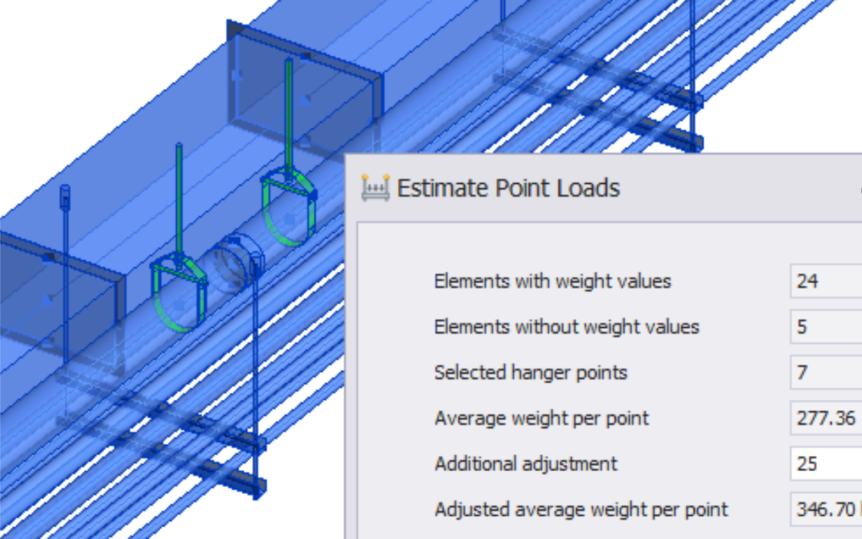
Building Information Modeling (BIM) has revolutionized the architecture, engineering, and construction (AEC) industries, particularly in complex system design such as Heating, Ventilation, and Air Conditioning (HVAC). In Atlanta, GA—a city known for its rapid urban growth and diverse climate challenges—BIM modeling for HVAC systems has become an essential tool for improving project efficiency, accuracy, and sustainability. This article explores the significance of BIM in HVAC design and implementation within Atlanta, highlighting its benefits, challenges, and future outlook.
Wait, are you interested in talking to a human instead of reading this full blog? Contact us to learn more about our services and whether BIMTM is the 100% U.S. based team you need on your next project.

The Growing Importance of BIM in HVAC Design
As Atlanta continues to expand with new commercial, residential, and industrial developments, the demand for efficient HVAC systems grows exponentially. The city’s humid subtropical climate necessitates HVAC solutions that can handle both cooling and heating efficiently, making system design more complex than in milder regions.
BIM technology enables engineers and contractors to create detailed 3D models of HVAC systems integrated within the building’s overall design. This integration allows for precise coordination between architectural, structural, and mechanical disciplines, reducing costly errors and rework during construction.
According to a 2023 report by the American Society of Heating, Refrigerating and Air-Conditioning Engineers (ASHRAE), projects utilizing BIM for HVAC design saw a 30% reduction in design errors and a 25% improvement in energy efficiency compared to traditional CAD-based approaches. These improvements are particularly relevant in Atlanta, where energy costs and sustainability goals are increasingly prioritized.
Why Atlanta’s Climate and Urban Environment Demand BIM
Atlanta’s climate features hot, humid summers and mild winters, which requires HVAC systems to be versatile and efficient year-round. Additionally, the city’s dense urban environment and growing infrastructure projects present spatial constraints and coordination challenges.
BIM’s ability to simulate airflow, thermal dynamics, and spatial conflicts in a virtual environment helps engineers optimize HVAC system layouts before installation. This reduces the risk of inadequate ventilation or overheating in buildings, which can lead to occupant discomfort and increased operational costs.
Furthermore, the integration of BIM with other technologies, such as IoT (Internet of Things) devices, allows for real-time monitoring and adjustments of HVAC systems. This synergy enables building managers to respond proactively to changes in occupancy or external weather conditions, ensuring that energy consumption is minimized while maintaining optimal comfort levels. In a city like Atlanta, where energy efficiency is not just a preference but a necessity, such advancements can significantly contribute to the overall sustainability of urban development.
Moreover, the collaborative nature of BIM fosters better communication among stakeholders, including architects, engineers, and contractors. By providing a shared platform for visualizing the HVAC system within the context of the entire building, all parties can engage in more informed decision-making. This collaborative approach not only enhances the design process but also streamlines project timelines, enabling faster delivery of essential infrastructure to meet the demands of Atlanta’s growing population.
Key Benefits of BIM Modeling for HVAC Systems in Atlanta
Enhanced Collaboration and Coordination
One of the primary advantages of BIM is the collaborative platform it provides. In Atlanta’s multifaceted construction projects, multiple stakeholders—including architects, mechanical engineers, contractors, and facility managers—can access and update a centralized BIM model in real-time.
This transparency ensures that HVAC designs are fully coordinated with other building systems such as electrical wiring and plumbing. It minimizes clashes and scheduling conflicts, which are common causes of delays and budget overruns in traditional workflows.
Improved Energy Efficiency and Sustainability
Atlanta’s commitment to green building standards, including LEED certification and local energy codes, makes sustainability a critical factor in HVAC design. BIM tools allow engineers to perform energy simulations and analyze different HVAC configurations to select the most efficient systems.
By integrating data on building orientation, insulation, and occupancy patterns, BIM models can predict energy consumption and recommend design adjustments. This proactive approach supports Atlanta’s broader goals to reduce carbon emissions and promote sustainable urban development.
Cost Savings and Risk Mitigation
Implementing BIM in HVAC projects leads to significant cost savings by reducing waste, avoiding rework, and optimizing material usage. In Atlanta’s competitive construction market, controlling costs without compromising quality is essential.
Moreover, BIM helps identify potential risks early in the design phase, such as spatial conflicts or equipment accessibility issues. Addressing these risks virtually prevents expensive on-site modifications and project delays.
Challenges and Considerations for BIM Adoption in Atlanta
Initial Investment and Training
Despite its benefits, adopting BIM technology requires upfront investment in software, hardware, and staff training. Smaller HVAC contractors in Atlanta may find these costs prohibitive initially.
However, many local industry groups and educational institutions offer BIM training programs tailored to HVAC professionals, helping to bridge the skills gap. Over time, the return on investment from improved project outcomes justifies the initial expenditure.
Data Management and Interoperability
Effective BIM implementation depends on managing large volumes of data and ensuring interoperability between different software platforms. Atlanta’s diverse construction projects often involve multiple vendors using various BIM tools, which can complicate data exchange.
Standardizing data formats and adopting open BIM protocols, such as Industry Foundation Classes (IFC), are critical steps to overcome these challenges. Local industry associations in Atlanta are increasingly advocating for these standards to streamline collaboration.
Regulatory and Code Compliance
HVAC systems must comply with a range of local and national codes, including Atlanta’s building codes and Georgia’s energy efficiency regulations. Integrating these requirements within BIM models requires up-to-date knowledge and precise modeling capabilities.
Fortunately, many BIM platforms now include code-checking features that automatically validate HVAC designs against relevant standards, reducing the risk of non-compliance and costly redesigns.
Case Studies: Successful BIM HVAC Projects in Atlanta
Atlanta Midtown Office Complex
A recent office tower project in Atlanta’s Midtown district utilized BIM modeling extensively for its HVAC system design. The project team integrated BIM with energy analysis tools to optimize the placement of air handling units and ductwork, resulting in a 20% reduction in energy consumption compared to baseline models.
The collaborative BIM environment helped coordinate HVAC installation with structural steel erection, minimizing on-site conflicts and accelerating the construction schedule by three weeks.
Healthcare Facility Expansion in Buckhead
In a major expansion of a healthcare facility in Buckhead, BIM was employed to design a complex HVAC system that met stringent air quality and ventilation standards. The model facilitated detailed simulations of airflow and contaminant control, ensuring patient safety and regulatory compliance.
The project also benefited from clash detection capabilities, which identified and resolved conflicts between HVAC piping and medical gas lines before construction began, saving significant time and costs.
The Future of BIM Modeling for HVAC in Atlanta
As Atlanta’s construction industry continues to embrace digital transformation, BIM modeling for HVAC systems is poised to become the standard rather than the exception. Emerging technologies such as artificial intelligence (AI), machine learning, and the Internet of Things (IoT) are being integrated with BIM to enhance predictive maintenance, real-time monitoring, and adaptive HVAC system control.
Furthermore, Atlanta’s push toward smart city initiatives will increasingly rely on BIM data to optimize building performance and energy management at a city-wide scale. HVAC systems modeled with BIM will play a crucial role in achieving these sustainability and efficiency goals.
In conclusion, BIM modeling offers significant advantages for HVAC system design and implementation in Atlanta, from improved collaboration and energy efficiency to cost savings and risk reduction. While challenges exist, ongoing advances in technology and training are making BIM more accessible and effective. For stakeholders involved in Atlanta’s dynamic construction sector, investing in BIM for HVAC systems is a strategic move toward smarter, greener, and more resilient buildings.
Ready to harness the full potential of BIM for your HVAC systems in Atlanta? Look no further than BIMTM, where our Lead Coordination service promises to revolutionize your project’s efficiency and effectiveness. With BIMTM, you’ll experience unparalleled collaboration, thanks to our integrated approach to design, construction, and facility management. Our MEP Coordination and Modeling services are not only detailed but also practical, crafted by tradespeople with a deep understanding of Electrical and Systems work to ensure constructibility. Don’t let the lack of an in-house team hold you back—BIMTM is your go-to partner for project augmentation, BIM modeling services, and REVIT staff training. Elevate your project’s success and avoid costly rework with our expert BIM consulting and design clash detection. Contact us today and take the first step towards smarter design and seamless project execution with BIMTM.