
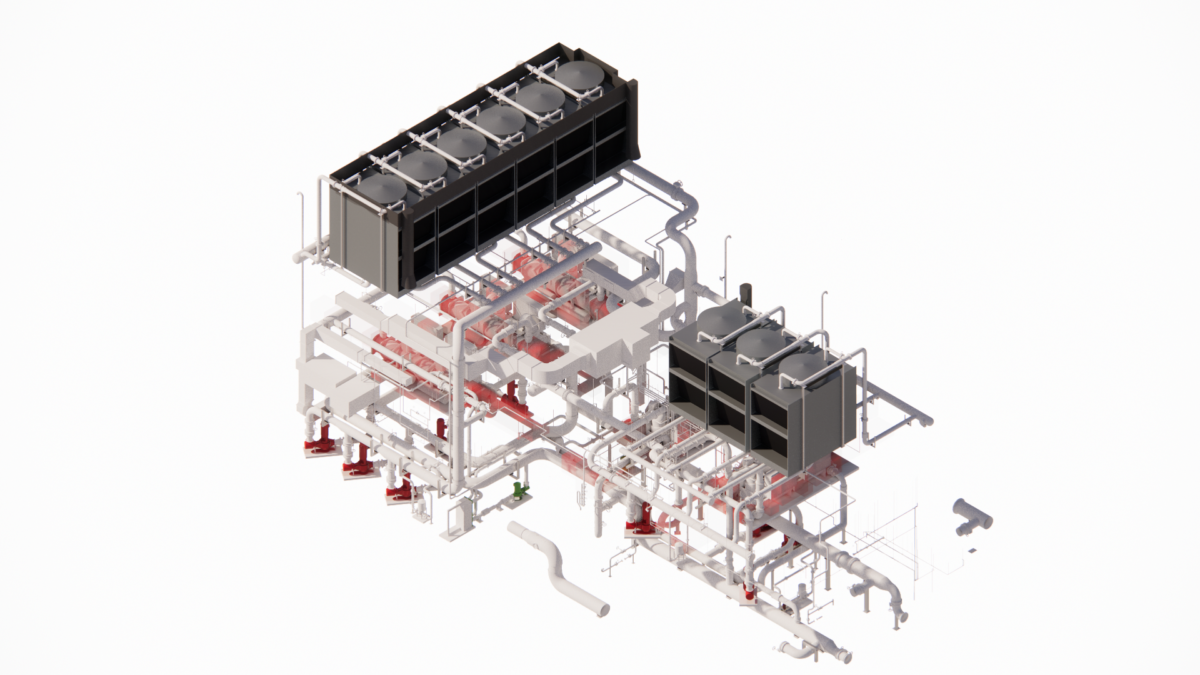
Building Information Modeling (BIM) has revolutionized the construction and design industry, offering unprecedented precision and collaboration opportunities. In Dallas, TX, where rapid urban growth and extreme weather conditions demand efficient and reliable HVAC systems, BIM modeling has become an indispensable tool. This article explores the role of BIM modeling in HVAC system design and implementation within Dallas, highlighting its benefits, challenges, and future prospects.
Wait, are you interested in talking to a human instead of reading this full blog? Contact us to learn more about our services and whether BIMTM is the 100% U.S. based team you need on your next project.

Understanding BIM and Its Relevance to HVAC Systems
Building Information Modeling (BIM) is a digital representation of physical and functional characteristics of a facility. It serves as a shared knowledge resource for information about a facility, forming a reliable basis for decisions during its lifecycle, from earliest conception to demolition. For HVAC systems, BIM integrates mechanical, electrical, and plumbing (MEP) components into a cohesive 3D model that enhances design accuracy and coordination.
In Dallas, where the climate ranges from hot summers to mild winters, HVAC systems must be designed to handle significant temperature fluctuations efficiently. BIM modeling allows engineers and contractors to simulate HVAC performance, optimize energy consumption, and ensure compliance with local building codes and sustainability standards. This is particularly important in a city that has seen a 20% increase in commercial construction projects over the past five years, according to the Dallas Builders Association.
Key Features of BIM for HVAC
BIM for HVAC systems includes detailed modeling of ductwork, piping, equipment placement, and airflow analysis. It supports clash detection, which identifies conflicts between HVAC components and other building elements early in the design phase, reducing costly on-site modifications. Additionally, BIM facilitates accurate material takeoffs and cost estimation, improving project budgeting and scheduling.
Benefits of BIM Modeling for HVAC Projects in Dallas
The adoption of BIM modeling for HVAC systems in Dallas offers a range of advantages that directly impact project outcomes and operational efficiency.
Improved Design Accuracy and Coordination
One of the most significant benefits of BIM is the enhanced accuracy in HVAC system design. Traditional 2D drawings often lack the depth and detail needed to foresee potential design conflicts. BIM’s 3D visualization allows engineers to coordinate HVAC layouts with architectural and structural elements seamlessly. This coordination minimizes the risk of errors and omissions, which can lead to costly delays.
For example, a recent office complex in downtown Dallas utilized BIM to integrate HVAC ductwork with ceiling and lighting plans. This integration prevented clashes that would have otherwise required rework during installation, saving the project approximately 15% in labor costs.
Energy Efficiency and Sustainability
Dallas is increasingly focused on sustainable building practices, driven by local regulations and the city’s commitment to reducing carbon emissions. BIM enables detailed energy modeling of HVAC systems, allowing engineers to optimize designs for energy efficiency. By simulating airflow, heat loads, and equipment performance, BIM helps select the most efficient components and configurations.
Moreover, BIM supports compliance with standards such as LEED (Leadership in Energy and Environmental Design) and ASHRAE (American Society of Heating, Refrigerating and Air-Conditioning Engineers) guidelines, which are critical for many Dallas construction projects aiming for green certification.
Enhanced Collaboration and Communication
BIM fosters collaboration among architects, engineers, contractors, and facility managers by providing a centralized platform for sharing information. In Dallas’s dynamic construction environment, where multiple stakeholders are involved, this transparency reduces misunderstandings and streamlines decision-making.
Real-time updates to the BIM model ensure that all parties work from the latest information, which is particularly valuable during fast-paced projects or when design changes occur. This collaborative approach has been shown to reduce project delivery times by up to 30%, according to industry reports.
Challenges and Considerations for Implementing BIM in Dallas HVAC Projects
While BIM offers numerous benefits, its implementation is not without challenges, especially in the context of HVAC system design in Dallas.
Initial Investment and Training
Adopting BIM technology requires significant upfront investment in software, hardware, and training. HVAC contractors and engineers in Dallas must be proficient in BIM tools and workflows to realize its full potential. This learning curve can slow initial project phases and increase costs if not managed properly.
However, many firms in Dallas have found that these initial costs are offset by long-term savings through improved efficiency and reduced rework.
Data Management and Integration
BIM models generate vast amounts of data, which must be managed carefully to maintain accuracy and usability. Integrating HVAC BIM models with other building systems and facility management software can be complex. Ensuring interoperability between different platforms and maintaining data consistency requires robust IT infrastructure and standardized processes.
Local Code Compliance and Customization
Dallas has specific building codes and environmental regulations that HVAC designs must meet. BIM models need to be customized to incorporate these local requirements, which can vary from national standards. Staying current with regulatory changes and embedding them into BIM workflows is essential for compliance and project approval.
Case Studies: Successful BIM Implementation in Dallas HVAC Projects
Several high-profile projects in Dallas demonstrate the effectiveness of BIM modeling for HVAC systems.
The Perot Museum of Nature and Science
The Perot Museum, a landmark facility in Dallas, utilized BIM extensively for its complex HVAC system. The project involved intricate air handling units and advanced climate control to protect sensitive exhibits. BIM enabled precise coordination between HVAC components and architectural features, ensuring optimal air quality and energy efficiency. The project team reported a 25% reduction in installation time due to early clash detection and improved collaboration.
Dallas-Fort Worth International Airport Expansion
The ongoing expansion of Dallas-Fort Worth International Airport incorporates BIM for designing large-scale HVAC systems capable of handling high passenger volumes and diverse environmental zones. BIM’s simulation capabilities have allowed engineers to optimize airflow and temperature control, enhancing passenger comfort while minimizing energy consumption. The project highlights BIM’s scalability for complex infrastructure developments.
The Future of BIM Modeling for HVAC in Dallas
As Dallas continues to grow and embrace smart city initiatives, the role of BIM in HVAC system design is poised to expand further.
Integration with IoT and Smart Building Technologies
Combining BIM with Internet of Things (IoT) sensors and smart building systems will enable real-time monitoring and adaptive control of HVAC operations. This integration promises improved energy management and predictive maintenance, reducing downtime and operational costs.
Advancements in AI and Machine Learning
Artificial intelligence and machine learning algorithms are beginning to enhance BIM capabilities by automating design optimizations and identifying potential issues more efficiently. In Dallas, where construction projects are increasingly complex, these technologies will support faster, more accurate HVAC system designs.
Greater Emphasis on Sustainability
With Dallas’s commitment to sustainability, BIM will play a critical role in achieving net-zero energy buildings. Advanced modeling techniques will help design HVAC systems that leverage renewable energy sources and minimize environmental impact.
Conclusion
BIM modeling for HVAC systems in Dallas, TX, is transforming how buildings are designed, constructed, and operated. By enhancing design accuracy, promoting energy efficiency, and fostering collaboration, BIM addresses many challenges faced by HVAC professionals in a rapidly growing and climate-sensitive city. While implementation requires investment and adaptation, the long-term benefits make BIM an essential tool for Dallas’s construction industry.
As technology evolves, BIM’s integration with smart building systems and AI will further revolutionize HVAC design and management, supporting Dallas’s vision for sustainable, efficient, and resilient infrastructure.
Ready to elevate your HVAC project in Dallas with the precision and efficiency of BIM modeling? Look no further than BIMTM. Our Lead Coordination service integrates design, construction, and facility management into a seamless digital workflow, ensuring all stakeholders collaborate effectively. With our proactive approach to clash detection and milestone tracking, we identify and resolve conflicts before they become costly issues. Our MEP Coordination and Modeling services are crafted by tradespeople with deep expertise in Electrical and Systems work, guaranteeing that our detailed models translate flawlessly from screen to site. Don’t let the absence of an in-house team hold you back—BIMTM is your go-to partner for BIM modeling services, REVIT staff training, and project augmentation. Whether you’re tackling a large-scale project or optimizing your core BIM leadership’s workload, we are your comprehensive BIM resource. Architects and Engineers, it’s time to design smarter. BIMTM specializes in BIM consulting and design clash detection, helping you navigate the complexities of creativity and constructability. For tailored support that ensures your designs are both innovative and executable, Contact us today.