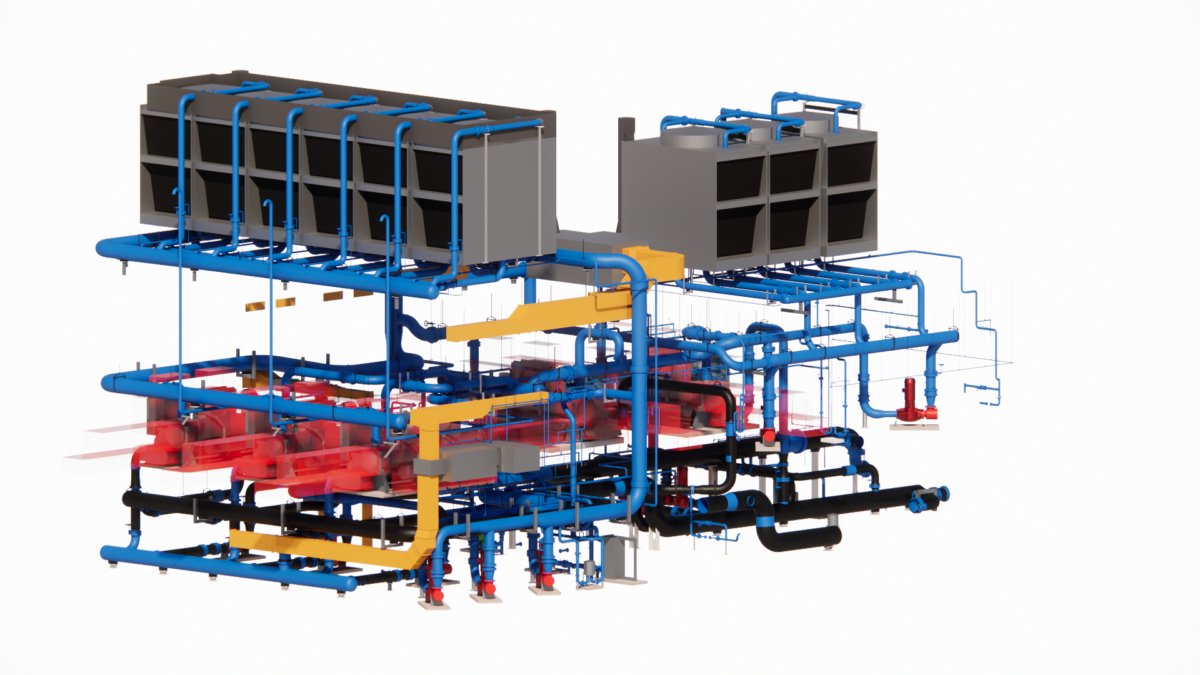
Building Information Modeling (BIM) has revolutionized the construction industry by enabling precise planning, design, and management of building systems. In Raleigh, North Carolina, a city experiencing rapid growth and development, BIM modeling for HVAC systems is becoming an indispensable tool for engineers, contractors, and building owners. This article explores the significance of BIM in HVAC design and installation, the benefits it offers in the context of Raleigh’s unique climate and construction demands, and how local industry professionals are leveraging this technology to deliver efficient, sustainable, and cost-effective HVAC solutions.
Wait, are you interested in talking to a human instead of reading this full blog? Contact us to learn more about our services and whether BIMTM is the 100% U.S. based team you need on your next project.

The Rising Importance of BIM in HVAC Design
Traditionally, HVAC system design relied heavily on 2D drawings and manual coordination, which often led to costly errors, clashes, and inefficiencies during construction. BIM modeling, however, provides a 3D digital representation of HVAC components integrated within the overall building design, allowing for real-time collaboration and visualization.
According to a 2023 survey by the American Society of Heating, Refrigerating and Air-Conditioning Engineers (ASHRAE), over 70% of HVAC projects in the U.S. now incorporate some form of BIM technology. In Raleigh, where commercial and residential construction is booming, BIM adoption is even more pronounced due to the complexity of modern HVAC systems and the demand for energy-efficient buildings.
By using BIM, engineers can simulate airflow, thermal loads, and system performance before installation, reducing the risk of design flaws and ensuring compliance with local building codes and sustainability standards. This predictive capability not only enhances the reliability of HVAC systems but also contributes to lower operational costs over the life of the building, as systems can be optimized for energy efficiency from the outset.
How BIM Enhances Collaboration Among Stakeholders
One of BIM’s greatest strengths lies in its ability to facilitate collaboration among architects, structural engineers, HVAC designers, and contractors. In Raleigh’s competitive construction market, this collaboration is crucial for meeting tight deadlines and budgets.
With a shared BIM model, all parties can identify potential conflicts—such as ductwork clashing with structural beams—early in the design phase. This proactive approach minimizes costly rework and delays during construction. Furthermore, BIM models can be updated in real time, ensuring everyone has access to the latest design information. This dynamic collaboration not only streamlines communication but also fosters a culture of teamwork, where stakeholders can contribute their expertise to refine designs and enhance project outcomes.
Moreover, the integration of BIM with other technologies, such as augmented reality (AR) and virtual reality (VR), is revolutionizing the way HVAC systems are visualized and understood. Stakeholders can immerse themselves in a virtual environment, walking through the building and interacting with the HVAC systems in a way that was previously unimaginable. This immersive experience allows for better understanding and identification of potential issues, leading to more informed decision-making and a stronger alignment among all parties involved in the project.
Tailoring HVAC Systems to Raleigh’s Climate Using BIM
Raleigh’s humid subtropical climate presents unique challenges for HVAC system design. Summers are hot and humid, requiring efficient cooling and dehumidification, while winters are mild but still necessitate reliable heating solutions. BIM modeling allows engineers to optimize HVAC systems specifically for these conditions.
By integrating local climate data into the BIM software, designers can simulate seasonal performance and energy consumption. This enables the selection of equipment and system configurations that maximize comfort and minimize operational costs.
Energy Efficiency and Sustainability Considerations
Sustainability is a growing priority in Raleigh’s building sector, driven by both regulatory requirements and market demand. The city is part of North Carolina’s broader commitment to reducing carbon emissions and promoting green building practices.
BIM helps HVAC professionals design systems that align with standards such as LEED (Leadership in Energy and Environmental Design) and ASHRAE 90.1 energy codes. For example, BIM can assist in sizing HVAC equipment precisely to avoid oversizing, which wastes energy, or undersizing, which compromises comfort.
Additionally, BIM facilitates the integration of renewable energy sources, such as geothermal heat pumps or solar-assisted HVAC systems, by modeling their interaction with traditional HVAC components and the building envelope.
Cost and Time Savings Through BIM Implementation
Implementing BIM for HVAC systems in Raleigh projects can lead to significant cost and time savings. A study by the Construction Industry Institute found that BIM can reduce project costs by up to 20% and shorten construction schedules by 7-10%.
These savings arise from improved accuracy in design, reduced material waste, and fewer on-site changes. For HVAC contractors, this means smoother installations and fewer unexpected challenges.
Improved Maintenance and Facility Management
BIM models are not just valuable during design and construction—they also serve as comprehensive digital records for facility managers. In Raleigh, where many buildings are adopting smart technologies, BIM can integrate with Building Management Systems (BMS) to monitor HVAC performance in real time.
This integration supports predictive maintenance by identifying potential system failures before they occur, reducing downtime and extending equipment lifespan. Facility managers benefit from easy access to detailed as-built information, streamlining repairs and upgrades.
Local Expertise and Resources Supporting BIM for HVAC in Raleigh
Raleigh boasts a growing community of BIM specialists and HVAC engineers who are well-versed in the latest software tools and industry best practices. Institutions like North Carolina State University offer advanced training in BIM and sustainable building design, contributing to a skilled local workforce.
Moreover, many Raleigh-based engineering firms have invested in cutting-edge BIM platforms such as Autodesk Revit and Navisworks, tailored specifically for HVAC modeling and coordination. These firms often collaborate closely with local contractors and suppliers to ensure seamless project delivery.
Case Studies: Successful BIM-Driven HVAC Projects in Raleigh
Several high-profile projects in Raleigh illustrate the benefits of BIM for HVAC systems. For example, the recent expansion of the Raleigh Convention Center incorporated BIM to optimize the HVAC design, resulting in a 15% reduction in energy consumption compared to traditional designs.
Another example is a mixed-use development in downtown Raleigh where BIM enabled the integration of complex HVAC systems with renewable energy technologies, achieving LEED Gold certification and enhancing occupant comfort.
Future Trends: The Evolution of BIM in HVAC Systems
As technology advances, BIM for HVAC systems in Raleigh is expected to evolve with the integration of artificial intelligence (AI), Internet of Things (IoT), and augmented reality (AR). These innovations will further enhance design precision, system monitoring, and maintenance capabilities.
AI algorithms can analyze BIM data to optimize HVAC system performance dynamically, while IoT sensors provide real-time feedback on environmental conditions and equipment status. AR tools allow technicians to visualize hidden HVAC components during maintenance, improving efficiency and safety.
Preparing for a Smarter, More Sustainable Raleigh
With Raleigh’s continued growth and commitment to sustainability, BIM modeling for HVAC systems will remain a critical component of building design and operation. Embracing these technologies ensures that HVAC systems are not only efficient and reliable but also adaptable to future needs and innovations.
For stakeholders in Raleigh’s construction and building management sectors, investing in BIM expertise and infrastructure today will pay dividends in reduced costs, enhanced occupant comfort, and a greener built environment.
As Raleigh continues to thrive and evolve, ensuring the efficiency and sustainability of your HVAC systems through BIM modeling is more crucial than ever. BIMTM stands at the forefront of this technological revolution, offering unparalleled Lead Coordination services that guarantee seamless integration and collaboration across all phases of your project. Our MEP Coordination and Modeling services are meticulously crafted by experienced tradespeople to ensure your project is not only constructible but also optimized for efficiency, avoiding expensive rework. With BIMTM, you gain access to expert project augmentation, BIM modeling services, and REVIT staff training, empowering you to design smarter and construct with confidence. Don’t let the complexities of HVAC BIM modeling hold you back. Contact us today and let BIMTM be your ally in building a smarter, more sustainable Raleigh.