
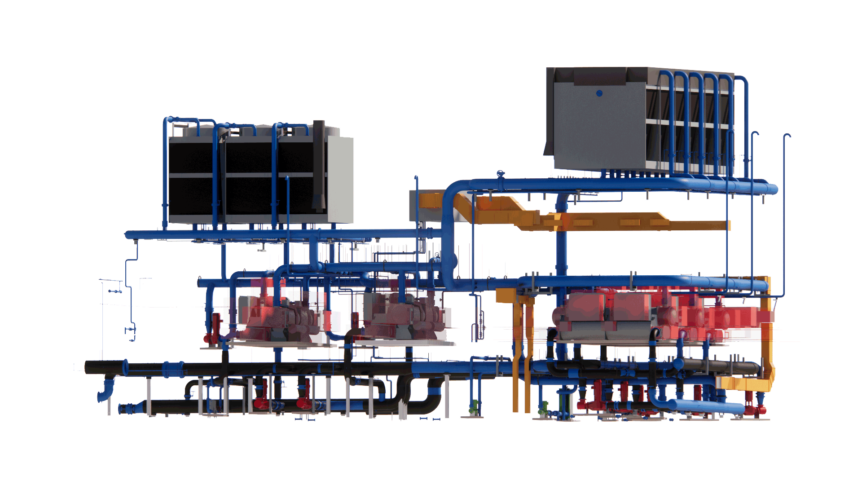
BIMTM understands how Building Information Modeling (BIM) has transformed construction by enabling more efficient, accurate, and collaborative project workflows. In Los Angeles, CA—a city with a dynamic construction market, strict codes, and a commitment to sustainability—BIM modeling for mechanical systems has become indispensable for high-quality infrastructure and commercial projects. BIMTM applies this technology to meet the city’s unique environmental, seismic, and regulatory demands.
Wait, are you interested in talking to a human instead of reading this full blog? Contact us to learn more about our services and whether BIMTM is the 100% U.S. based team you need on your next project.

Understanding BIM Modeling for Mechanical Systems
When applied to mechanical systems such as HVAC, plumbing, and fire protection, BIM creates intelligent 3D models enriched with design, construction, and operational data. These models help stakeholders visualize the full scope of ductwork, piping, and equipment within the building context, ensuring that systems fit seamlessly and comply with local requirements.
In Los Angeles—where energy efficiency and climate variability are key—BIM enables performance simulations that allow teams to optimize systems before construction begins. This proactive approach reduces costly errors, enhances comfort, and contributes to long-term operational savings.
Scope of Mechanical BIM
Mechanical BIM modeling involves more than visualization. It integrates manufacturer specifications, maintenance schedules, and spatial coordination, avoiding clashes with structural and electrical elements. The result is streamlined installation and a smoother project lifecycle.
Advanced analyses, such as airflow simulation and energy modeling, ensure that designs align with California’s energy standards and sustainability goals. BIMTM leverages these tools to support efficient system layouts and compliance with Title 24, LEED, and other benchmarks that define modern building performance.
Why BIM Matters for Mechanical Systems in Los Angeles
Los Angeles presents distinct challenges for mechanical system design, including seismic safety, stringent energy codes, and ambitious sustainability targets. BIM addresses these needs directly.
- Seismic Resilience: BIM allows simulation of system behavior under seismic conditions, ensuring components are securely anchored and compliant with California standards.
- Energy Efficiency: With Title 24 regulations and the city’s climate action goals, BIM provides tools to optimize system performance and energy usage before installation.
- Sustainability Integration: BIM supports the adoption of advanced technologies like VRF systems and smart controls, ensuring smooth integration into building designs.
Benefits of BIM for Mechanical Systems
BIMTM’s mechanical modeling approach delivers tangible advantages to Los Angeles projects:
- Collaboration: A shared digital platform keeps all project contributors aligned.
- Clash Detection: Early identification of conflicts prevents rework and delays.
- Enhanced Visualization: 3D models improve client understanding and approvals.
- Lifecycle Value: BIM models remain useful beyond construction, aiding maintenance, system upgrades, and energy management.
Best Practices in Los Angeles Projects
To maximize results, BIMTM applies practices tailored to local conditions:
- Early involvement of BIM coordination specialists.
- Integration of California codes and Title 24 standards directly into models.
- Use of advanced tools such as Autodesk Revit, Navisworks, and Trimble SysQue.
- Rigorous quality control, version management, and clear communication protocols.
Case Studies
- LA Metro Purple Line Extension: BIM coordinated mechanical, electrical, and plumbing systems within tight underground spaces, avoiding costly conflicts.
- Wilshire Grand Center: The tallest building in Los Angeles used BIM for HVAC and fire protection systems, achieving LEED Gold certification through energy optimization.
The BIMTM Advantage
BIMTM offers a specialized approach to mechanical system coordination:
- Local Knowledge: Familiarity with Los Angeles codes, seismic demands, and sustainability goals.
- Hands-On Expertise: Models crafted by tradespeople with real-world MEP experience.
- Proven Process: Precise clash detection, milestone tracking, and constructible models that minimize rework and delays.
Conclusion
In Los Angeles, BIM modeling for mechanical systems is no longer optional—it is a necessity. By combining digital precision with proactive planning, BIMTM helps project teams achieve efficiency, compliance, and sustainability from concept through construction and beyond.
Whether augmenting an existing team, delivering detailed BIM models, or training staff in REVIT, BIMTM ensures constructibility and operational excellence. With BIMTM, stakeholders can expect fewer errors, smoother coordination, and smarter builds across every stage of the project lifecycle.
Ready to take your Los Angeles project to the next level?
Contact BIMTM today and put your mechanical systems on the path to efficiency, accuracy, and long-term performance.