
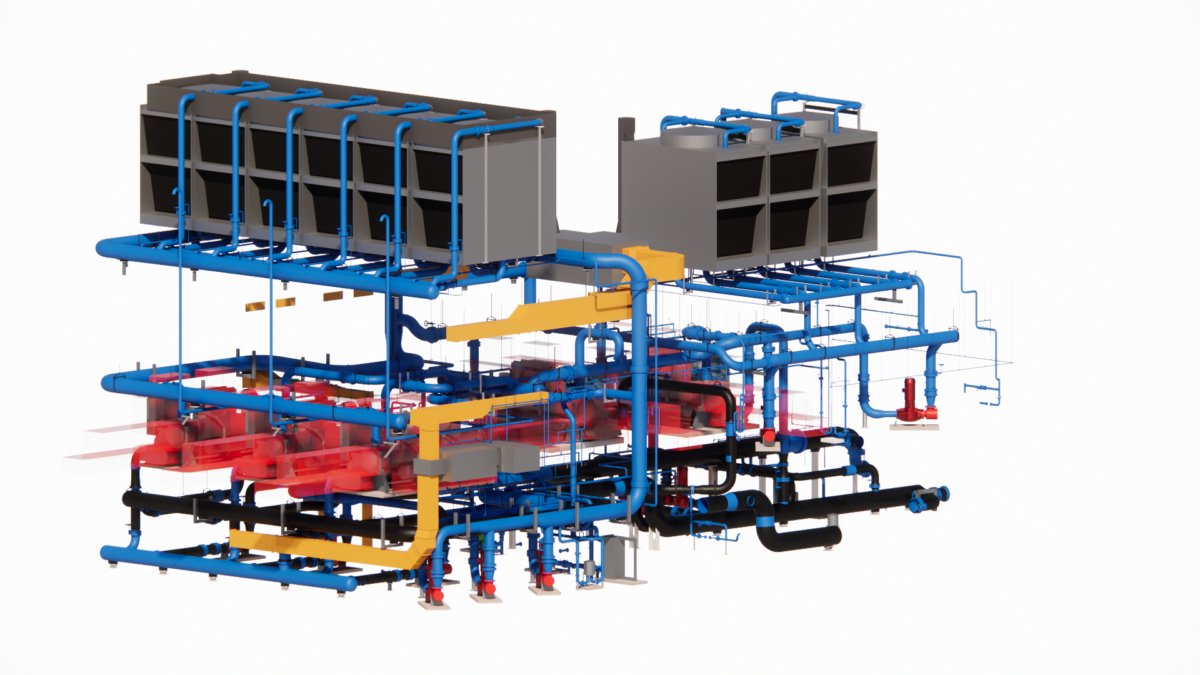
BIMTM understands the challenges of delivering mechanical systems in a city that blends historic architecture with cutting-edge infrastructure. In Washington DC, where energy codes, sustainability mandates, and space constraints converge, BIM modeling has become an essential tool for ensuring mechanical systems are efficient, compliant, and constructible. From HVAC to plumbing and fire protection, BIMTM applies precision modeling to streamline coordination, improve energy performance, and support long-term building operations.
Wait, are you interested in talking to a human instead of reading this full blog? Contact us to learn more about our services and whether BIMTM is the 100% U.S. based team you need on your next project.

Understanding BIM for Mechanical Systems
BIM creates intelligent 3D models that integrate physical geometry, specifications, and operational data into a single resource. Every pipe, duct, and equipment component is digitally represented with exact detail, enabling accurate visualization, clash detection, and performance simulations.
In Washington DC, where mechanical systems must meet strict energy and environmental regulations, BIMTM leverages these models to anticipate conflicts, optimize layouts, and support compliance with local codes. By simulating energy usage and system performance during design, projects reduce costly rework and achieve higher efficiency from day one.
Why Washington DC Projects Demand BIM
Mechanical systems in the nation’s capital face unique pressures:
- Historic Retrofitting: Upgrading older structures with modern systems while preserving architectural integrity.
- Sustainability Standards: Meeting requirements under the DC Green Building Act, LEED, and other certifications.
- Dense Urban Environments: Coordinating systems in constrained spaces without disrupting structural or aesthetic requirements.
- Resilience & Comfort: Delivering reliable, efficient HVAC and plumbing systems in alignment with the city’s energy and climate goals.
BIMTM’s modeling services ensure that these challenges are met with precision and collaboration.
Benefits of BIMTM’s Mechanical Modeling Services
- Enhanced Coordination
Clash detection resolves issues between ducts, pipes, and other systems before construction begins, avoiding delays and rework. - Energy Efficiency & Sustainability
Performance simulations optimize equipment sizing, airflow, and thermal loads, aligning with Washington DC’s strict energy mandates. - Lifecycle Value
BIM models act as digital twins, supporting facility managers with data for maintenance, upgrades, and energy tracking. - Streamlined Procurement
Accurate quantity takeoffs reduce material waste and improve cost control, critical for projects in tightly regulated environments.
Case Studies in Washington DC
- Walter E. Washington Convention Center: BIM coordinated complex HVAC ductwork and plumbing systems during expansion, ensuring efficient installation and compliance with performance standards.
- Federal Building Retrofit: BIM facilitated the upgrade of mechanical systems in a historic landmark while maintaining architectural integrity. Detailed modeling reduced installation time by 15% and lowered costs.
- Healthcare Facilities: Hospitals and public health buildings have used BIMTM’s clash detection and coordination services to integrate high-performance HVAC and plumbing systems that meet strict operational requirements.
Overcoming Implementation Challenges
BIM adoption in Washington DC requires:
- Skilled Teams: Proficiency in BIM tools and MEP system modeling. BIMTM provides expertise to bridge workforce gaps.
- Data Management: Coordinating large datasets across multiple firms. BIMTM uses standardized workflows and cloud-based platforms to maintain accuracy.
- Initial Investment: BIM requires software, training, and process adaptation, but long-term savings in time and cost far outweigh the upfront expense.
The Future of BIM in Washington DC
Emerging technologies are expanding BIM’s role:
- IoT Integration: Real-time sensor data enhances system monitoring and predictive maintenance.
- AI-Driven Analytics: Automated design optimization reduces design time and identifies energy-saving opportunities.
- Smart Building Alignment: Linking BIM to automation systems supports the city’s drive toward smart, sustainable infrastructure.
As Washington DC advances toward climate resilience and energy efficiency, BIMTM is positioned to deliver the digital precision that makes these initiatives achievable.
Conclusion
BIM modeling for mechanical systems is redefining how projects are designed, built, and maintained in Washington DC. By enhancing coordination, improving sustainability, and supporting lifecycle management, BIMTM delivers solutions that meet the city’s high standards for performance and compliance.
Ready to optimize your Washington DC project? Partner with BIMTM for Lead Coordination, MEP Modeling, clash detection, and REVIT training. Our models are built by tradespeople with real-world systems expertise, ensuring constructibility and efficiency from design to installation. With BIMTM, you’ll minimize errors, streamline procurement, and keep your projects on track.
Contact us today to make BIMTM your trusted partner for smarter, more sustainable mechanical systems in Washington DC.